

Fisher
114C
Rosemount 114C thermowell
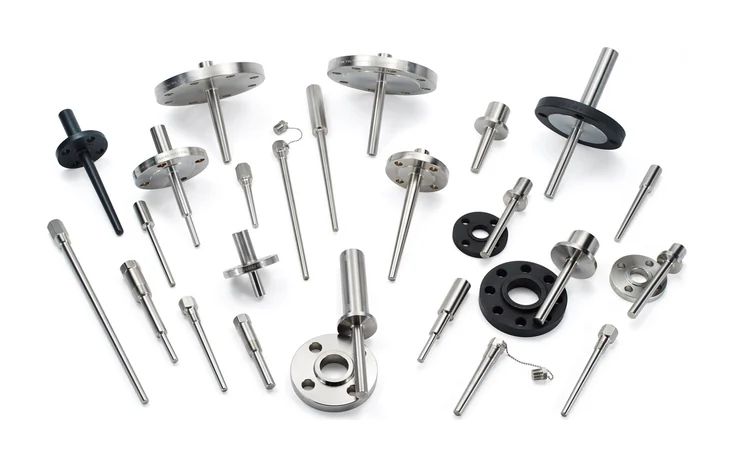
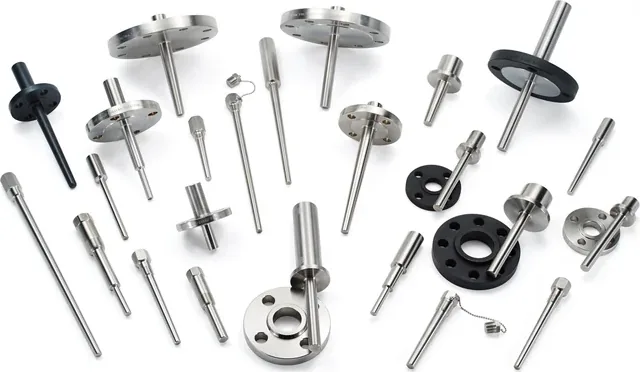
Solid barstock thermowell: threaded, flanged, Van Stone or welded, with a straight, tapered or stepped stem.
Temperature · Rosemount
A mechanical part exposed to the flow: selected by connection and material, and verified by calculation.
A thermowell is a closed-end metal tube installed pressure-tight into a vessel or pipe. It protects the temperature sensor from flow-induced stress, high pressure and corrosive chemicals.
It lets the sensor be removed for calibration or replacement without shutting down the process. Rosemount offers different process connections, styles and materials; the stem profile is chosen to favor accuracy and response or mechanical strength.
Models
Manufacturer reference models for this type. Tell us the exact model or attach the nameplate: scope and availability are confirmed with each quotation.
Fisher
114C
Solid barstock thermowell: threaded, flanged, Van Stone or welded, with a straight, tapered or stepped stem.
Fisher
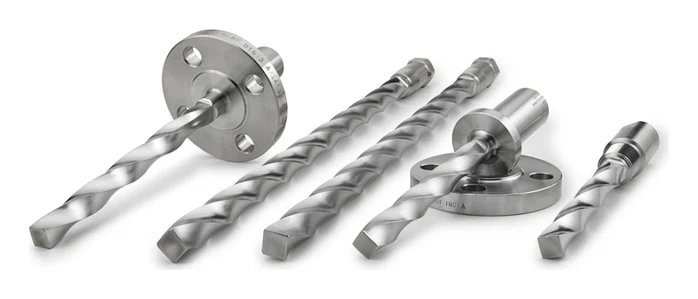
Twisted Square
For services where a conventional thermowell does not pass the ASME PTC 19.3 TW evaluation.
Fisher
96
Barstock thermowell declared obsolete by the manufacturer; the current replacement is quoted.
Fisher
1097
Compact barstock thermowell, flanged or welded, declared obsolete by the manufacturer.
Brand reference models per the manufacturer’s catalog. ITS quotes new valves and genuine parts to order; it does not publish stock or prices.
How it works
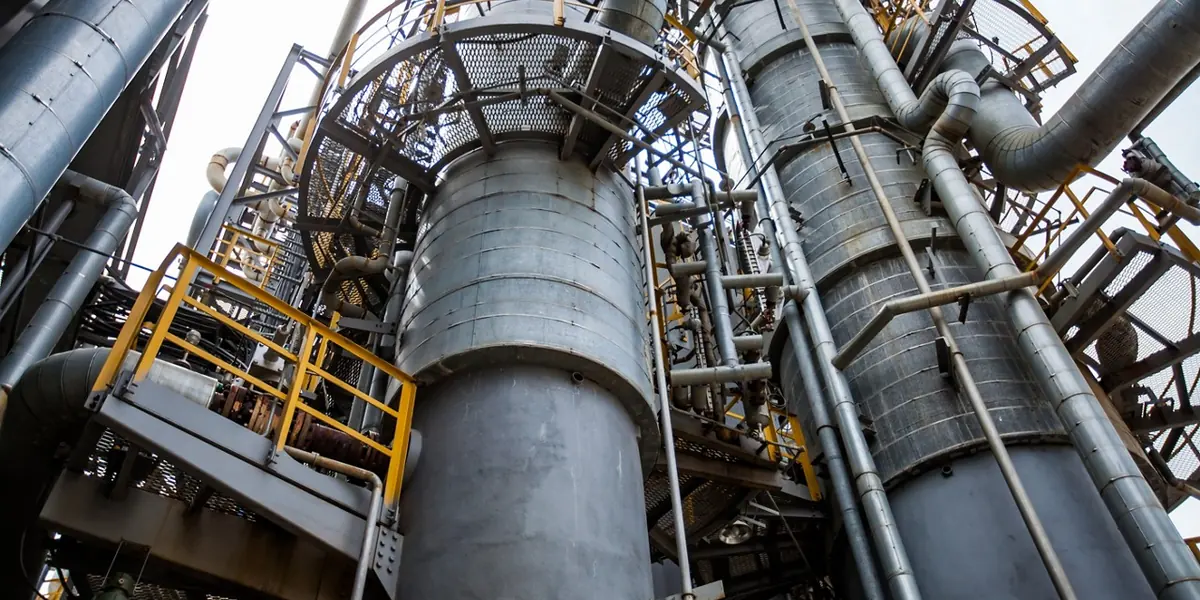
The thermowell is exposed to the flow, which sheds vortices around it and makes it vibrate. If the frequency of those vortices approaches the natural frequency of the thermowell, the part can fatigue and break. That is why it is verified against ASME PTC 19.3 TW, which sets four criteria: frequency, dynamic stress, steady-state stress and hydrostatic pressure limit.
Emerson offers a free online tool, the Rosemount Thermowell Design Accelerator, that runs those calculations for many tags at once and recommends the model. When a conventional thermowell fails the calculation, the alternatives are to change the profile, shorten the insertion or measure without penetrating the process.
The process connection is chosen for the pressure class, the piping code and the need for removal.
Straight, tapered or stepped: the profile balances mechanical stiffness and speed of response.
According to the manufacturer, its design eliminates more than 90% of dynamic stress, the main cause of fatigue failures, and solves the cases that do not pass ASME PTC 19.3 TW.
Stainless steels and alloys to suit the corrosion and temperature of the service.
Applications
ITS de Venezuela
We quote new Rosemount thermowells, alone or as an assembly with sensor and transmitter, support the selection with the manufacturer calculation, install and commission the measurement point in the field, calibrate the sensor and transmitter through our calibration service, in the field and in the laboratory, and integrate the measurement into the control loop. We reply with availability in Venezuela or Orlando. To quote, send the fluid, pressure, temperature and velocity or flow rate, line size, process connection, insertion length, material and the sensor it will hold.
Quote parts or repairPressure, temperature, flow and volume, in the field and in the laboratory.
On-site support, shutdowns, commissioning and start-up.
Loops, actuation, re-engineering and equipment upgrades.
Resources
The full category, the technical library and the manufacturer’s official documentation.
Category
Transmitters, RTD and thermocouple sensors, thermowells.
Technical library
Our own documents and official Fisher links for each family.
Manufacturer
Product pages, bulletins and manuals on emerson.com.
Because the flow sheds vortices that make it vibrate and can fatigue it until it breaks. ASME PTC 19.3 TW sets four design criteria: frequency, dynamic stress, steady-state stress and hydrostatic pressure limit.
The options are to change the stem profile, reduce the insertion length, use a design such as the Twisted Square or do without the thermowell through a non-intrusive measurement such as Rosemount X-well technology.
Temperature
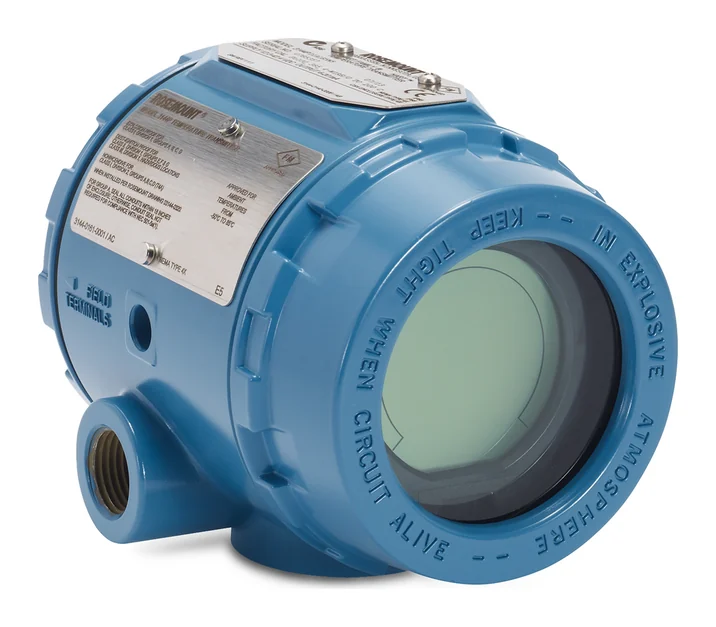
They convert RTD and thermocouple signals into 4-20 mA, HART, fieldbus or wireless, and watch over sensor health.
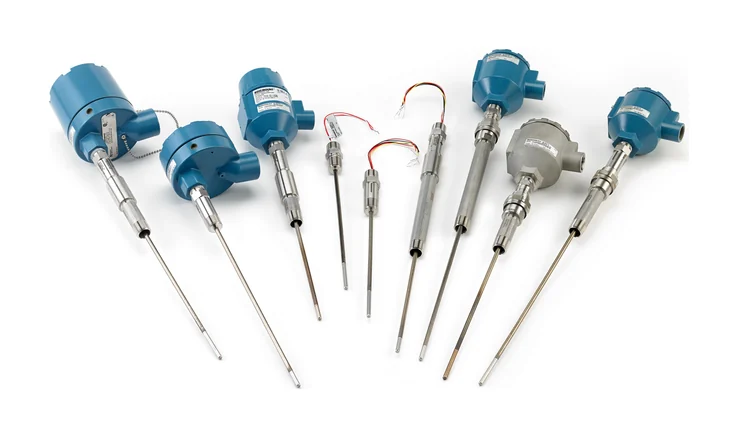
Platinum RTDs for accuracy and stability; thermocouples for high temperature, vibration and fast response.
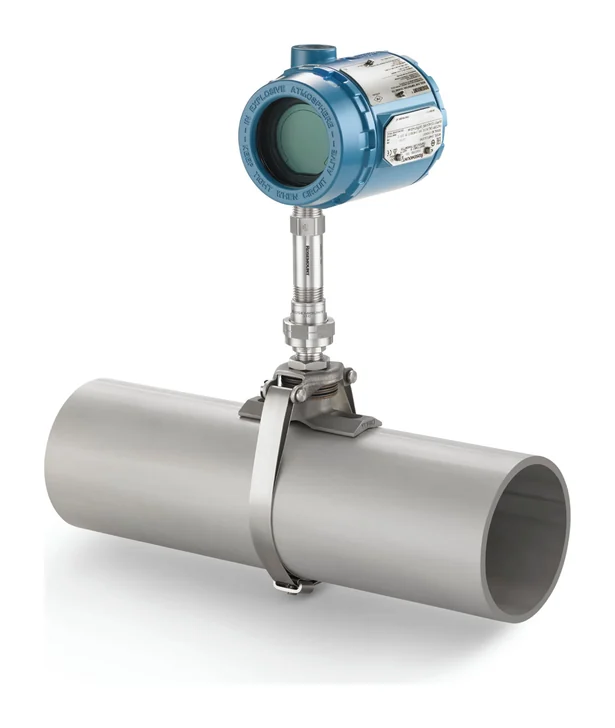
Process temperature with no thermowell and no penetration, and wireless transmission for points without cable.
Send the model, the part number or the process data. We reply with availability, lead time and delivery terms.