

Pressure transmitters
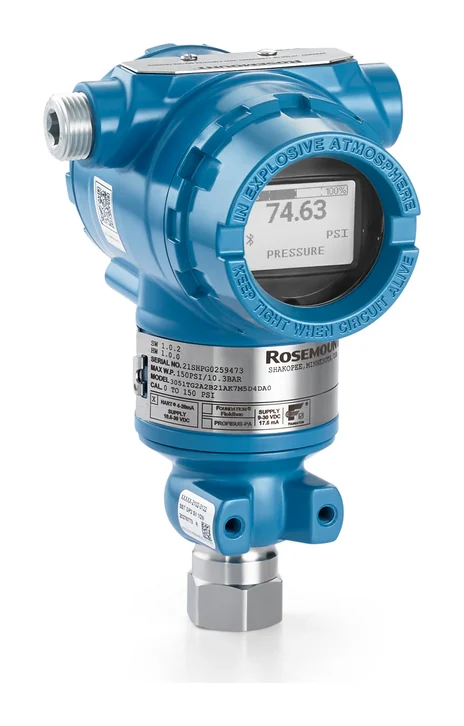
Pressure transmitters. Gauge, absolute and differential pressure, Coplanar or in-line, with HART, fieldbus or wireless.
- 3051
- 3051S
- 2051
- 2088
- 4051S
- 3051S MultiVariable

Measurement · Pressure
Gauge, absolute and differential pressure transmitters, with manifolds and remote seals.
Selection follows an order: pressure type (absolute, gauge or differential), range, accuracy, process contact, connection and accessories, and signal and approvals. A well-selected transmitter operates in the middle of its range and is calibrated with traceability.
With corrosive, viscous or hot fluids, a remote seal separates the sensor from the process; the manifold lets you isolate, equalize and vent the transmitter without stopping the process. Both are specified together with the transmitter.
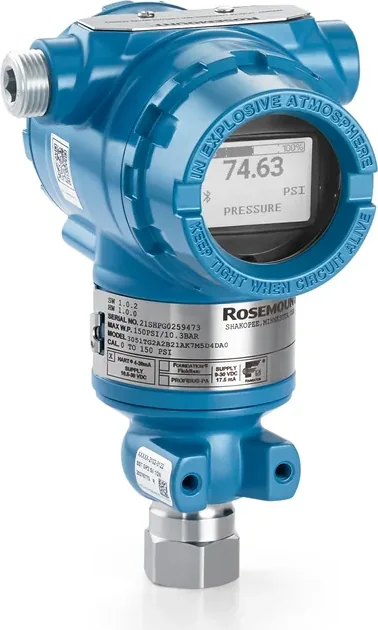
From the transmitter to the process tap: the measurement is only as good as its installation.
Pressure is the most measured variable in a plant and the basis of two others: flow by differential pressure and level by hydrostatic head. A Rosemount transmitter measures gauge, absolute or differential pressure and delivers it to the control system over a current loop, a fieldbus or a wireless network.
Around the transmitter there is an assembly that decides the outcome: the manifold that isolates and vents it, the diaphragm seal that protects it from hot, corrosive or viscous fluids, and the way pressure is carried from the tap to the sensor.
Plugged impulse lines, capillaries affected by temperature and mechanical gauges that fail without warning degrade the reading before the transmitter does.
With the assembly properly specified, transmitter, manifold and seal, the measurement stays stable and is calibrated without stopping the process.
Pressure transmitters. Gauge, absolute and differential pressure, Coplanar or in-line, with HART, fieldbus or wireless.
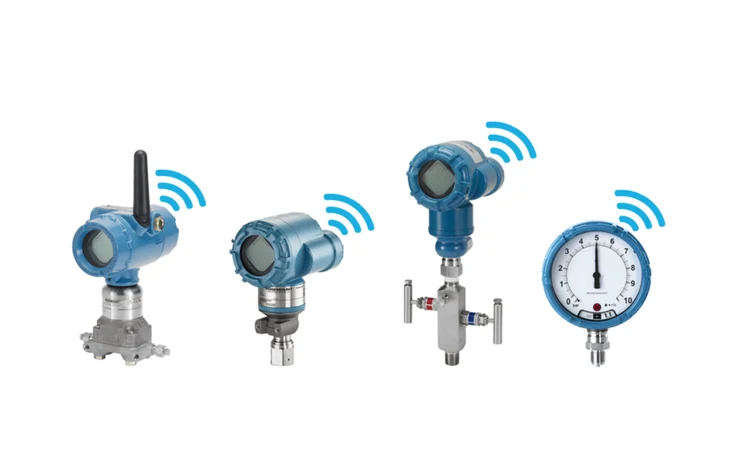
Wireless pressure. Transmitters and gauges with WirelessHART for the points where running cable is not justified.
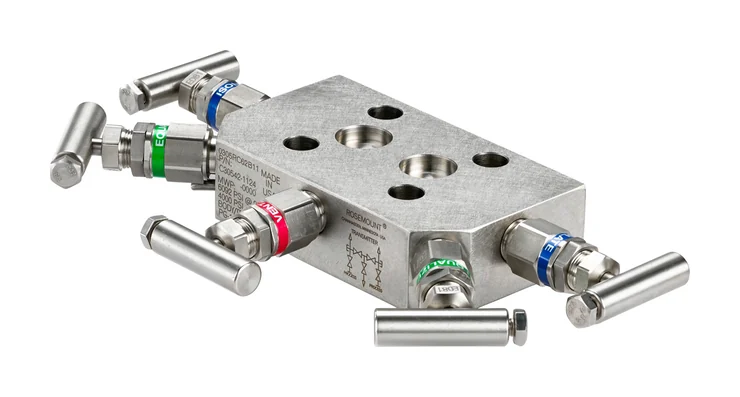
Manifolds. Isolation, equalization and venting of the transmitter in one compact block, assembled and tested with it.
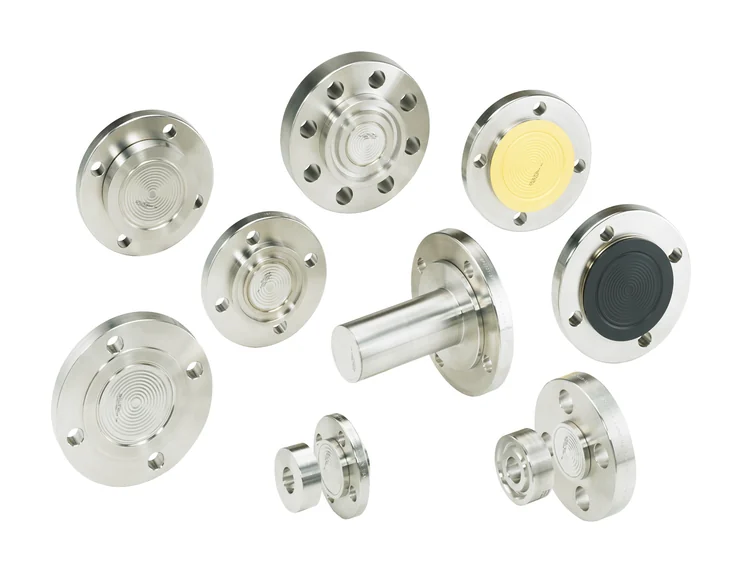
Diaphragm seals. Remote seals and electronic remote sensors to measure where the transmitter cannot touch the fluid.
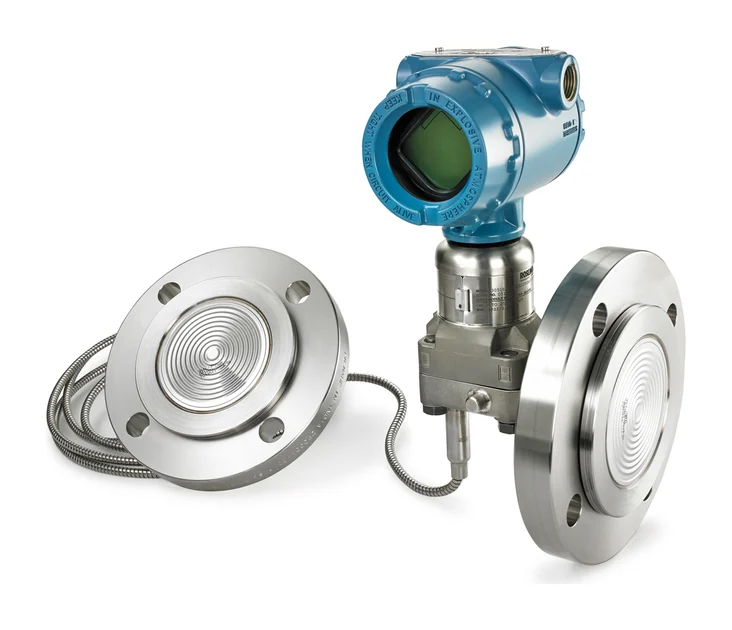
Differential pressure level. Level from hydrostatic head, in open and pressurized tanks, with seals or remote sensors.
Families
Pressure transmitters and differential-pressure level.
Gauge, absolute and differential pressure transmitter.
Scalable pressure transmitter platform.
Pressure transmitter for general-purpose applications.
Compact gauge and absolute pressure transmitter.
Differential-pressure level transmitter with flanged seal.
Reference families of the brand. Give the exact model in your request: scope and availability are confirmed with each quote.
Selection guide
Absolute, gauge or differential.
Normal operating pressure in the middle of the span; check the process overpressure limits.
What the loop requires, distinguishing reference accuracy from long-term stability, on span or on reading.
Wetted-parts material and a remote seal for corrosive, viscous or hot fluids.
Process connection and manifold.
4–20 mA HART, fieldbus or wireless; hazardous-area approvals and a periodic calibration plan.
Accessories
Manifolds let you isolate, equalize and vent the transmitter without stopping the process. Remote seals separate the sensor from corrosive, viscous, hot or solids-laden fluids. Both are specified together with the transmitter.
Calibration
ITS de Venezuela calibrates these instruments in the field and in the laboratory, certified under ISO/IEC 17025:2017. Each instrument is returned with its calibration certificate.
See the calibration serviceCalibration scope
ISO/IEC 17025:2017
Brands
Service
What we do on this equipment in the shop and in the field.
Pressure, temperature, flow and volume, in the field and in the laboratory.
Configuration, diagnostics and commissioning of controllers and instruments.
On-site support, shutdowns, commissioning and start-up.
In this order: pressure type (absolute, gauge, differential), range with normal operation mid-span, required accuracy, material and seal for the fluid, process connection and accessories, output signal and approvals, and calibration plan.
Gauge pressure is measured against the atmosphere; absolute, against vacuum, and is used where atmospheric pressure varies or in vacuum service; differential is the difference between two taps and is used for orifice-plate flow, level in pressurized tanks and pressure drop across filters.
It depends on loop criticality, the transmitter’s specified stability and the plant’s quality or fiscal requirements: your metrology program sets the interval. What should be required is traceability, with calibration in a laboratory accredited under ISO/IEC 17025.
Give us the pressure type, range, fluid, connection, signal and approvals, or the nameplate model.
