

Fisher
3051SAL
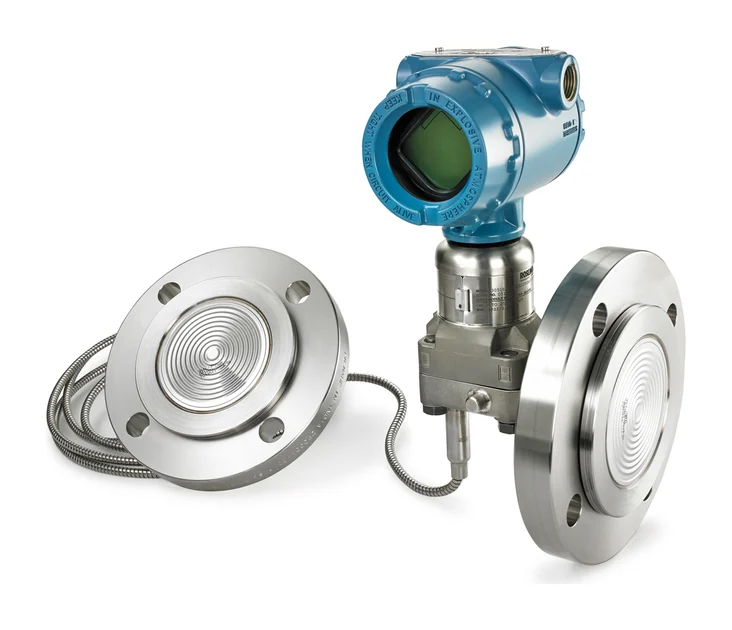
Rosemount 3051SAL level transmitter
3051S transmitter with an integrated diaphragm seal, as a level assembly.

Pressure · Rosemount
The best-known level method in the plant: the pressure of the liquid column, measured with a pressure transmitter.
A differential pressure level transmitter calculates level from the pressure of the liquid column and its specific gravity. It does not measure level directly: that is why product density is part of the measurement.
In an open tank it is enough to measure the pressure at the bottom; in a closed or pressurized tank the difference between the bottom and the vapor space is measured. Rosemount delivers them as level assemblies with the diaphragm seal integrated.
Models
Manufacturer reference models for this type. Tell us the exact model or attach the nameplate: scope and availability are confirmed with each quotation.
Fisher
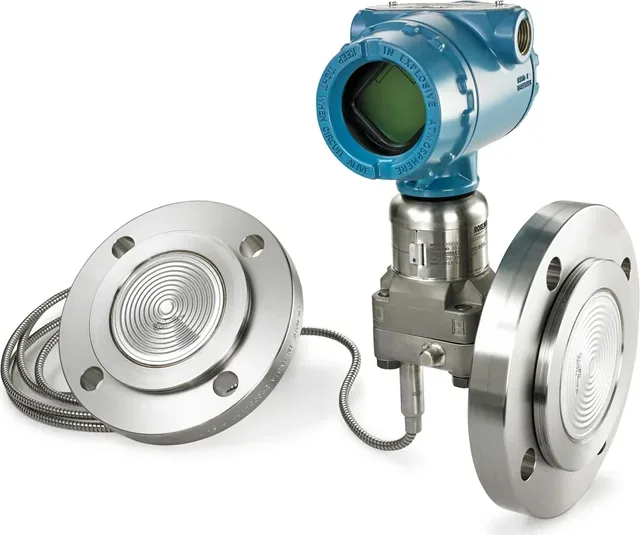
3051SAL
3051S transmitter with an integrated diaphragm seal, as a level assembly.
Fisher
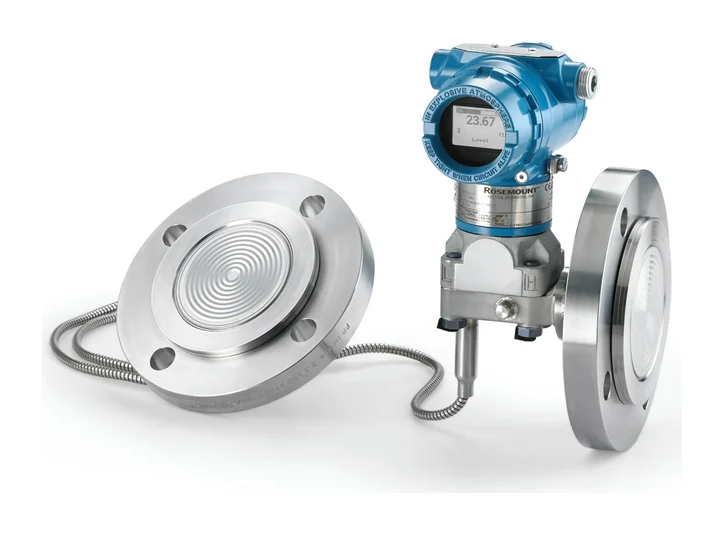
3051L
Differential pressure level transmitter with a flange-mounted seal.
Fisher
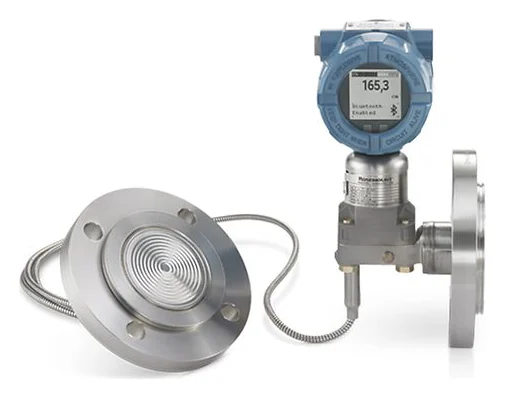
4051SLT
Level in pressurized or vented tanks, with flexible mounting options and Bluetooth connectivity.
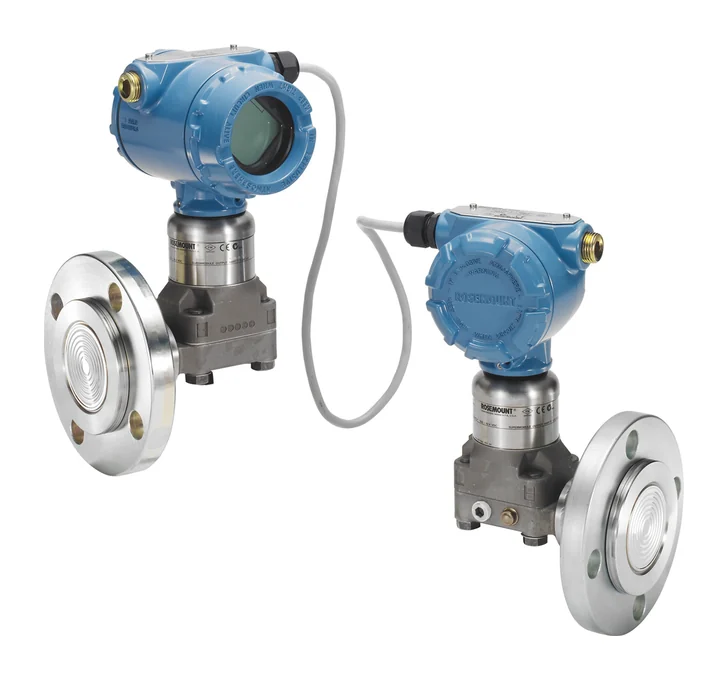
Fisher
3051S ERS
Level on tall vessels with two cable-linked sensors and no capillaries.
Brand reference models per the manufacturer’s catalog. ITS quotes new valves and genuine parts to order; it does not publish stock or prices.
How it works
The high side of the transmitter connects to the lower tap and the low side to the upper one. The difference is proportional to the liquid height multiplied by its specific gravity. The connection to the tank is made with flange seals, capillaries or impulse lines, depending on the temperature and nature of the fluid.
Ambient and process conditions influence the measurement, mostly through the capillaries and the fill fluid. That is why the assembly is sized: system type, transmitter range, diaphragm thickness, capillary length and fill fluid.
The transmitter mounts on the tank flange with the seal integrated, as in the 3051L and the 3051SAL.
For closed tanks: one seal at each tap, joined to the transmitter by capillaries, in balanced or tuned systems.
Two pressure sensors, one at each tap, calculate the difference electronically. Suited to tall vessels and wherever capillaries would need heat tracing.
They allow the diaphragm to be cleaned in fouling or crystallizing fluids, without removing the transmitter.
Applications
ITS de Venezuela
We quote new Rosemount level transmitters, seals and ERS systems and their accessories; we install, configure the range and commission in the field, calibrate the transmitter through our calibration service, in the field and in the laboratory, and integrate the measurement into the control loop. We reply with availability in Venezuela or Orlando. To quote, send the fluid and its specific gravity, process and ambient temperatures, vessel pressure, distance between taps, flange size and class, and output signal.
Quote parts or repairPressure, temperature, flow and volume, in the field and in the laboratory.
On-site support, shutdowns, commissioning and start-up.
Loops, actuation, re-engineering and equipment upgrades.
Resources
The full category, the technical library and the manufacturer’s official documentation.
Category
Gauge, absolute and differential transmitters.
Technical library
Our own documents and official Fisher links for each family.
Manufacturer
Product pages, bulletins and manuals on emerson.com.
It measures the pressure exerted by the liquid column and, with the specific gravity of the product, converts it into height. In a closed tank the difference between the bottom and the vapor space is measured to subtract the vessel pressure.
Instead of a single transmitter with capillaries or impulse lines, it uses two pressure transmitters connected by a cable, which calculate differential pressure electronically. It improves response time, eliminates heat tracing and also allows each pressure to be monitored separately.
Pressure
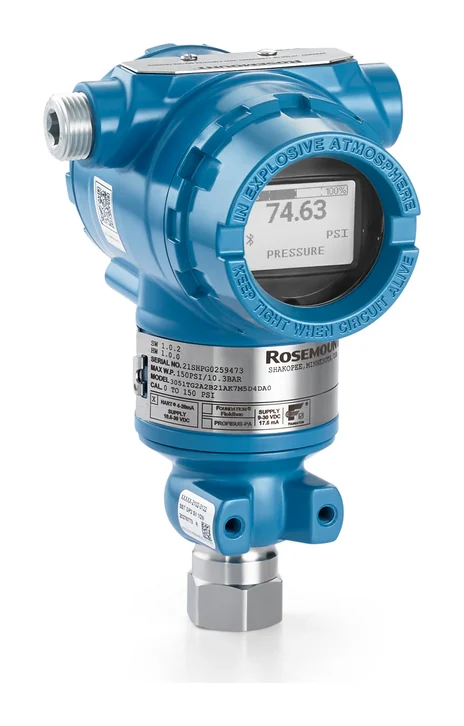
Gauge, absolute and differential pressure, Coplanar or in-line, with HART, fieldbus or wireless.
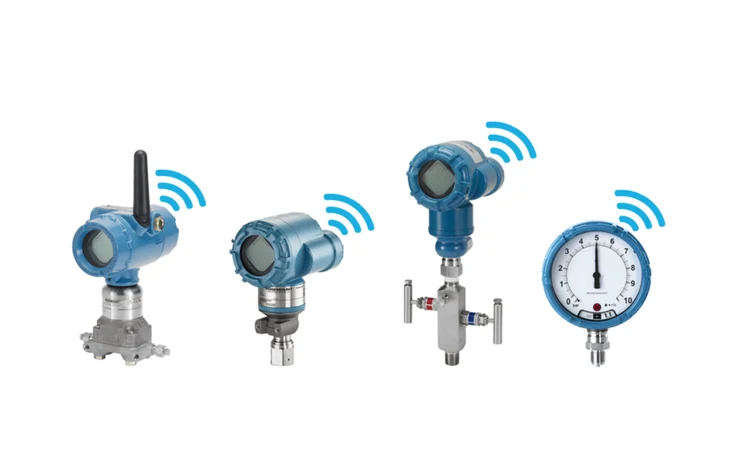
Transmitters and gauges with WirelessHART for the points where running cable is not justified.
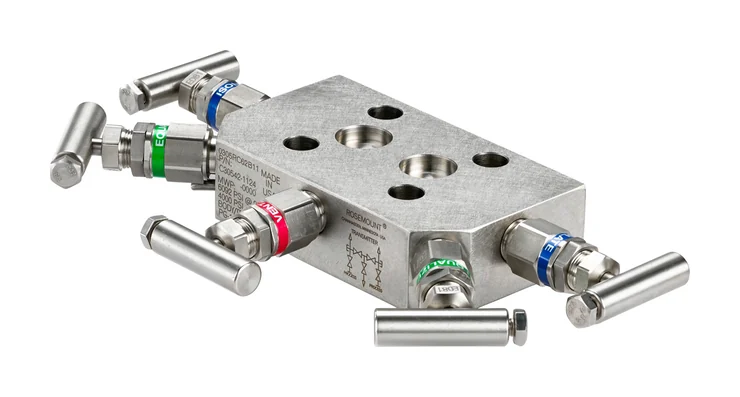
Isolation, equalization and venting of the transmitter in one compact block, assembled and tested with it.
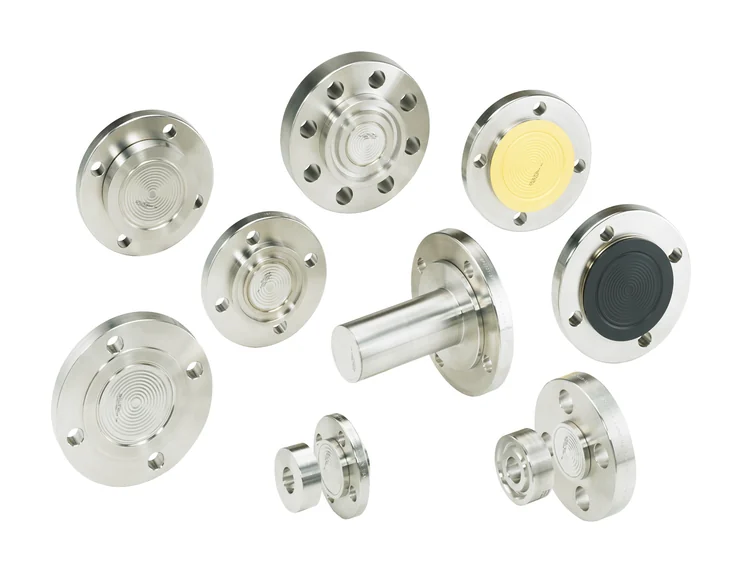
Remote seals and electronic remote sensors to measure where the transmitter cannot touch the fluid.
Send the model, the part number or the process data. We reply with availability, lead time and delivery terms.