

Fisher
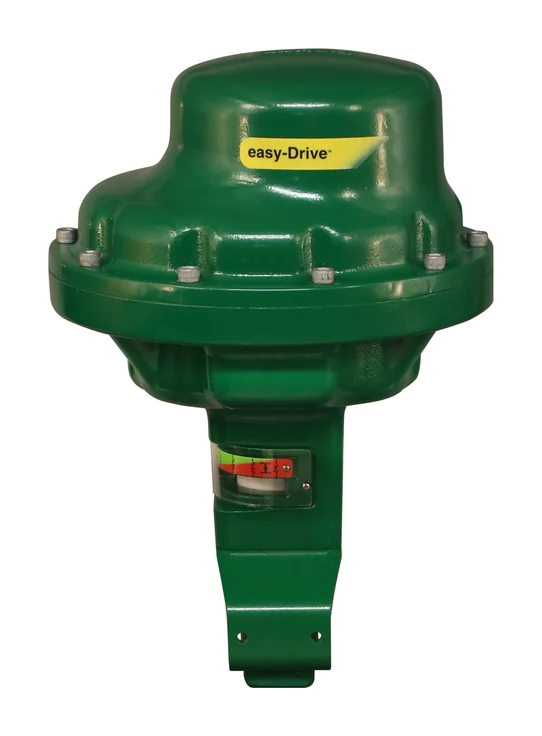
easy-Drive 200R
Fisher easy-Drive 200R electric actuator
Rotary, for throttling or on/off service; controlled by Modbus RTU, 4-20 mA or dry contact.
View bulletin
Actuators · Fisher
For wellheads, remote stations and plants without instrument air: a motor and a reduction move the valve on the signal from the control system.
An electric actuator uses a motor to move the valve: it receives the signal from the control system and drives a gear or a screw that takes the valve to the requested position, with no instrument air and no compressor.
Current designs handle continuous throttling and, because they vent no process gas, provide zero-emission automation. The Fisher easy-Drive line, for wellheads and remote locations, offers the linear 200L and the rotary 200R; Bettis offers quarter-turn and multi-turn models for isolation valves.
Models
Manufacturer reference models for this type. Tell us the exact model or attach the nameplate: scope and availability are confirmed with each quotation.
Fisher
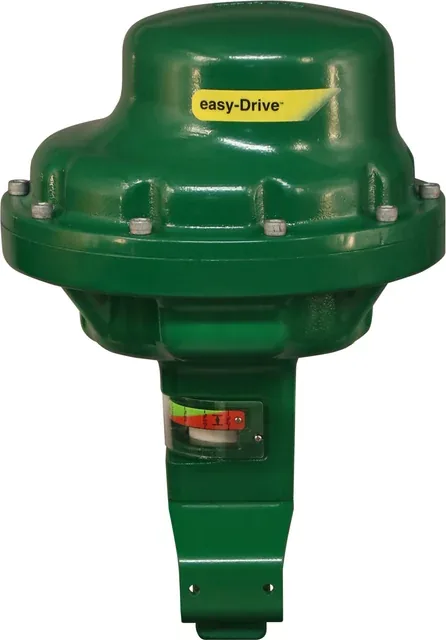
easy-Drive 200R
Rotary, for throttling or on/off service; controlled by Modbus RTU, 4-20 mA or dry contact.
View bulletin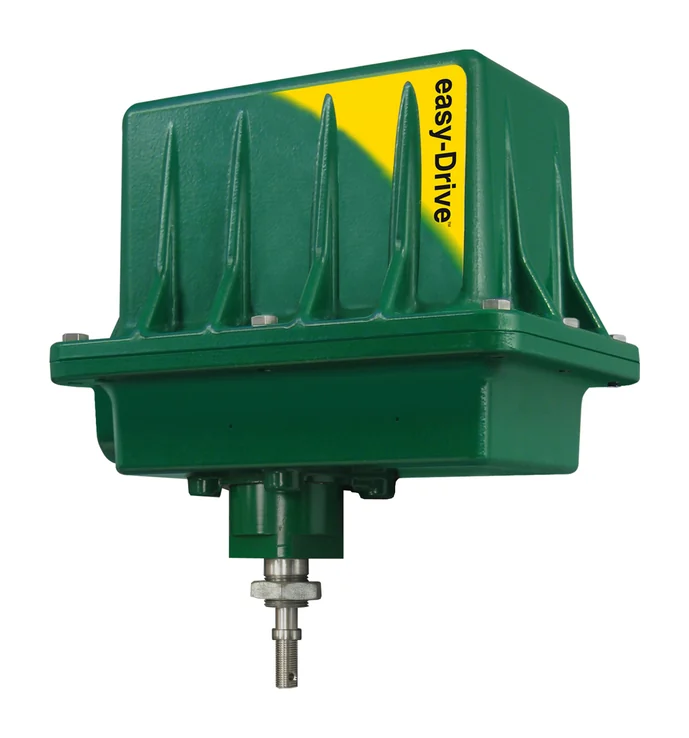
Fisher
easy-Drive 200L
Compact linear actuator for sliding-stem valves in throttling or on/off service.
View bulletin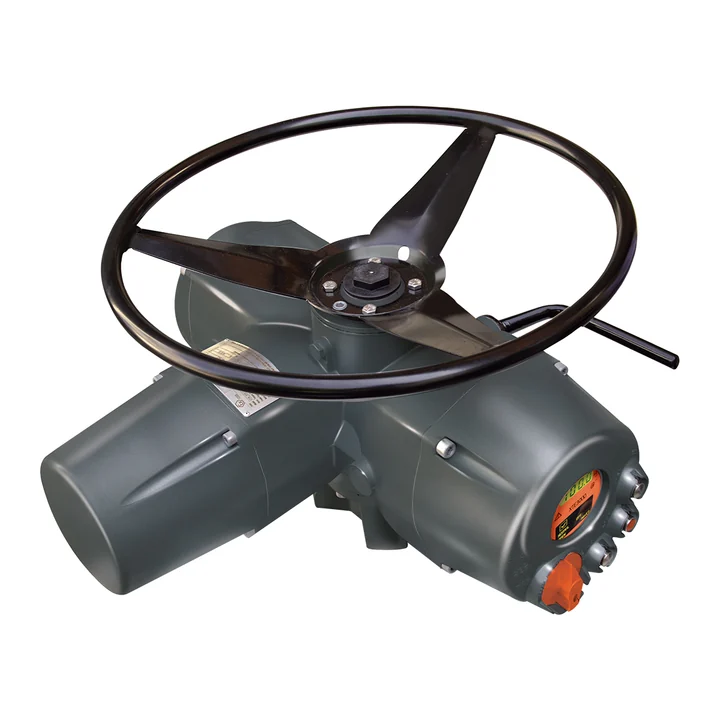
Fisher
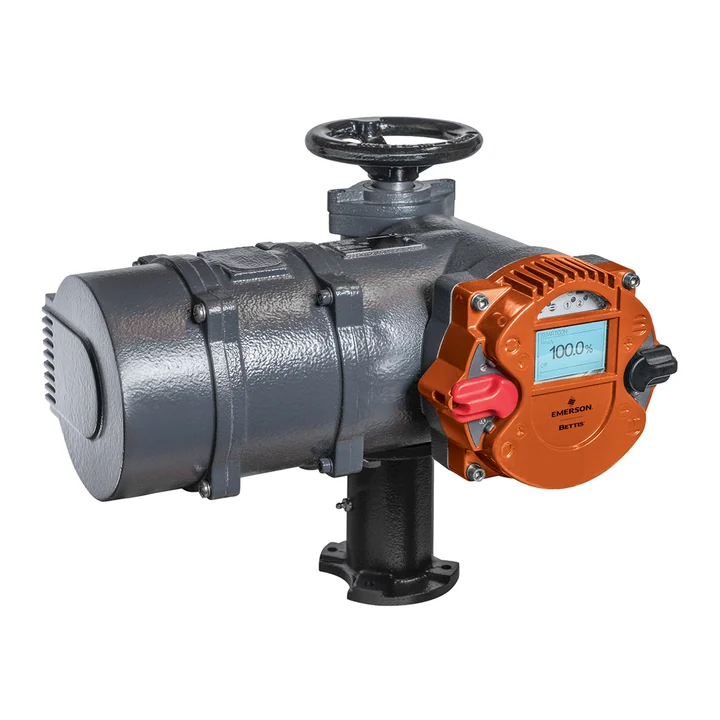
XTE3000
Intelligent, non-intrusive multi-turn actuator with a local panel for operation, configuration and diagnostics.
Fisher
RTS
Intelligent, non-intrusive actuators with mechanical spring-return fail-safe options.
Fisher
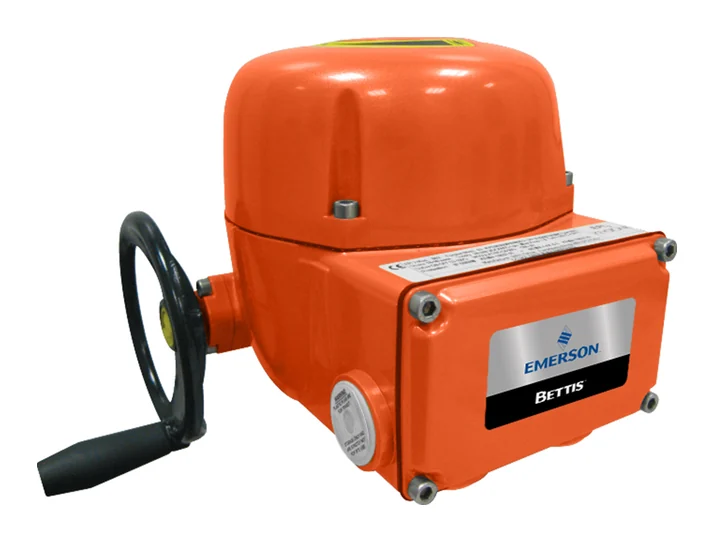
SCE300
Compact, lightweight quarter-turn actuator for low-torque valves and dampers.
Brand reference models per the manufacturer’s catalog. ITS quotes new valves and genuine parts to order; it does not publish stock or prices.
How it works
The actuator receives the control signal and its motor, through a reduction mechanism, moves the stem or shaft to the requested position. easy-Drive actuators accept Modbus RTU, a 4-20 mA signal or dry contact, are calibrated with one button from their configurator and, over the Modbus network, report their status without sending personnel to the site.
Their low DC power demand suits wellheads and remote installations with limited supply, and an optional backup unit drives the valve to its safe position on loss of power. On the non-intrusive Bettis actuators, operation, configuration and diagnostics are done from the local panel, without opening the housing; the RTS Series adds mechanical spring-return options.
Compact linear electric actuator for sliding-stem valves such as the D3 and D4, in throttling or on/off service.
Quarter-turn electric actuator for rotary valves, in throttling or on/off service.
The XTE3000 is multi-turn and logs operating data, alarms and valve torque curves; the SCE300 is a compact, lightweight quarter-turn actuator.
Intelligent, non-intrusive actuators with mechanical spring-return options on loss of power.
Applications
ITS de Venezuela
We quote Fisher easy-Drive and Bettis electric actuators and their genuine parts, mount them on the valve and configure them: travel, control signal and Modbus communication. In our Puerto Ordaz workshop and in the field we handle commissioning and stroke verification, and we train the personnel who operate them. Parts are managed through the Venezuela ↔ Orlando inventory. For a quotation, send the valve type and size, the required thrust or torque, the available electrical supply, the control signal and the required position on failure.
Quote parts or repairLoops, actuation, re-engineering and equipment upgrades.
On-site support, shutdowns, commissioning and start-up.
Courses on control valves, FIELDVUE and instrumentation.
Resources
The full category, the technical library and the manufacturer’s official documentation.
Category
Pneumatic, electric and hydraulic valve automation.
Technical library
Our own documents and official Fisher links for each family.
Manufacturer
Product pages, bulletins and manuals on emerson.com.
When there is no instrument air on site or installing and maintaining a compressor is not justified: wellheads, remote locations and unmanned installations. Also when the goal is to eliminate venting from actuators driven by natural gas. Where reliable instrument air already exists and a simple safe position is needed, the spring pneumatic actuator remains the most direct option.
Five things: the type of valve (multi-turn, quarter-turn or linear), the type of service (on/off, modulating or control), whether fail-safe is needed, the torque or thrust range, and the preferred actuator style, non-intrusive or conventional.
Actuators
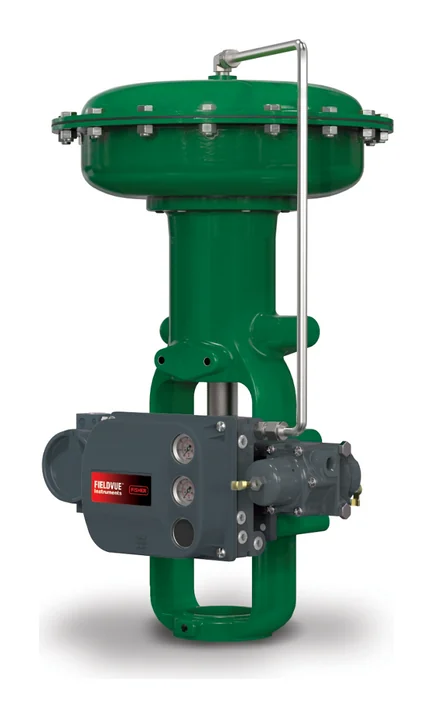
The most widely used actuator on control valves: air pushes a diaphragm against a spring and, if the air fails, the spring drives the valve to its safe position.
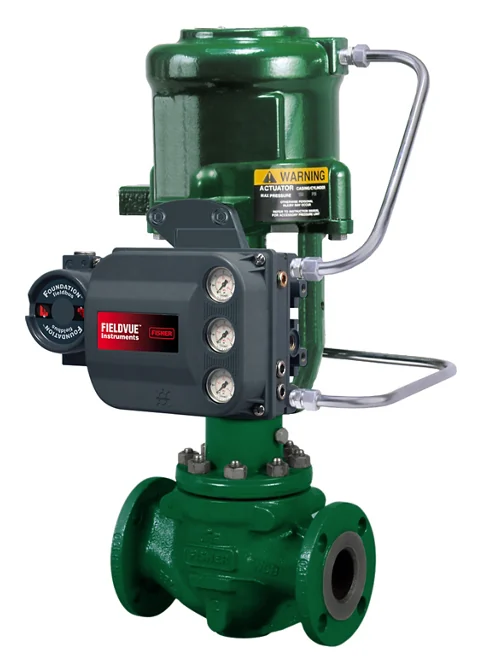
More thrust and stiffness than a diaphragm: air acts on a piston to move large valves or valves with high pressure drops.
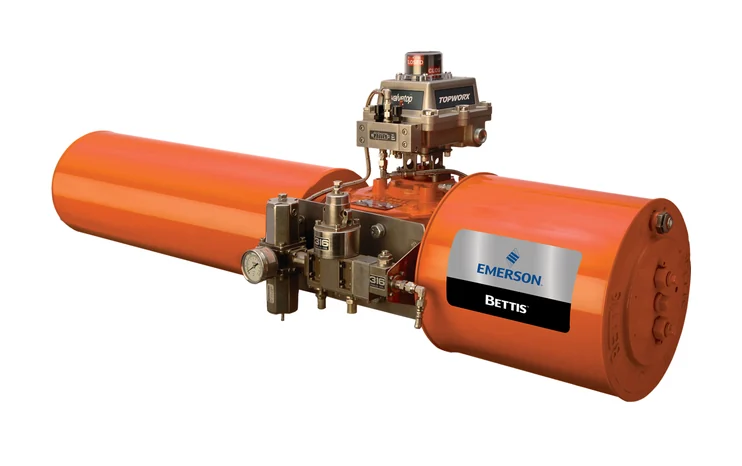
Quarter-turn with torque where the valve needs it: the yoke turns piston thrust into rotation for ball, butterfly and plug valves.
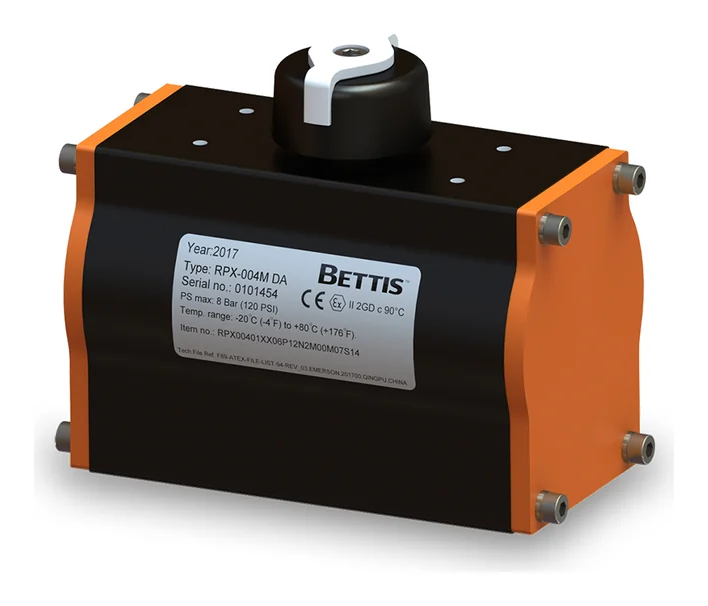
Compact and balanced: two piston racks turn a central pinion to automate ball, butterfly and plug valves.
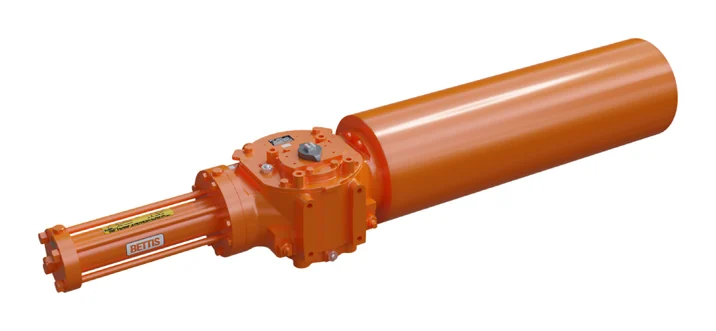
High torque and fast response for large, high-pressure and emergency shutdown valves.
Send the model, the part number or the process data. We reply with availability, lead time and delivery terms.