

Fisher
657
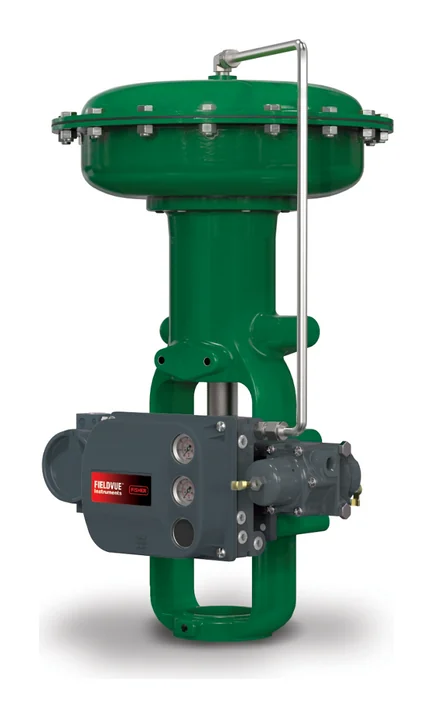
Fisher 657 diaphragm actuator
Direct-acting for sliding-stem valves: air extends the stem and the spring retracts it.
View bulletin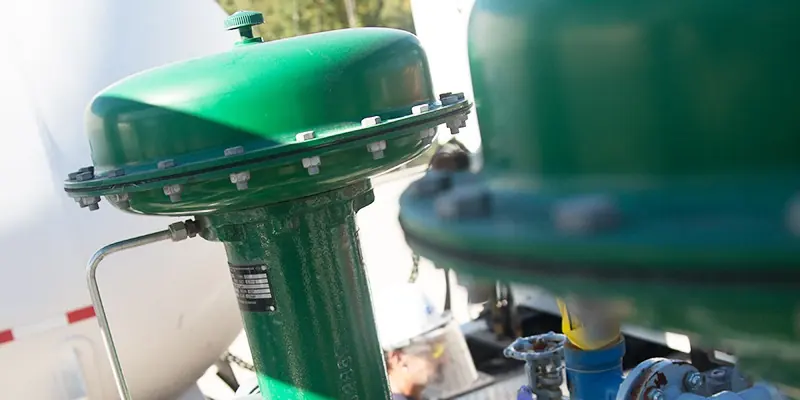
Actuators · Fisher
Air on a diaphragm, an opposing spring and a defined safe position on loss of supply: the simplest way to throttle accurately.
A spring-and-diaphragm actuator turns a pneumatic signal into the motion that positions the control valve. Air acts on a flexible diaphragm against a spring, and each pressure corresponds to one stem position.
It is the most common design because, if the air supply fails, the spring drives the valve to a known position, open or closed, with no accessories. At Fisher, the 657 and 667 serve sliding-stem valves and the 1052 and 2052, rotary valves.
Models
Manufacturer reference models for this type. Tell us the exact model or attach the nameplate: scope and availability are confirmed with each quotation.
Fisher
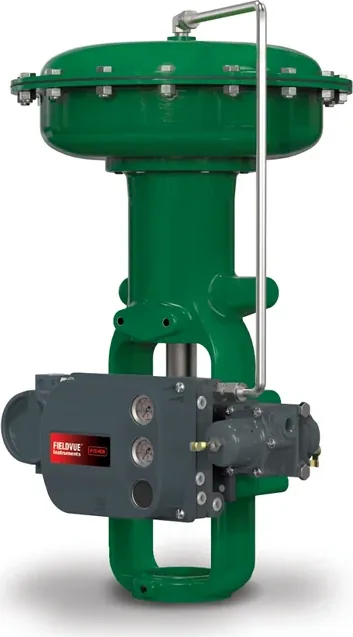
657
Direct-acting for sliding-stem valves: air extends the stem and the spring retracts it.
View bulletin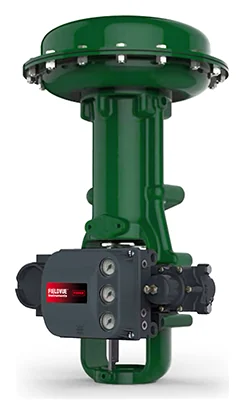
Fisher
667
Reverse-acting: air retracts the stem and the spring extends it.
View bulletin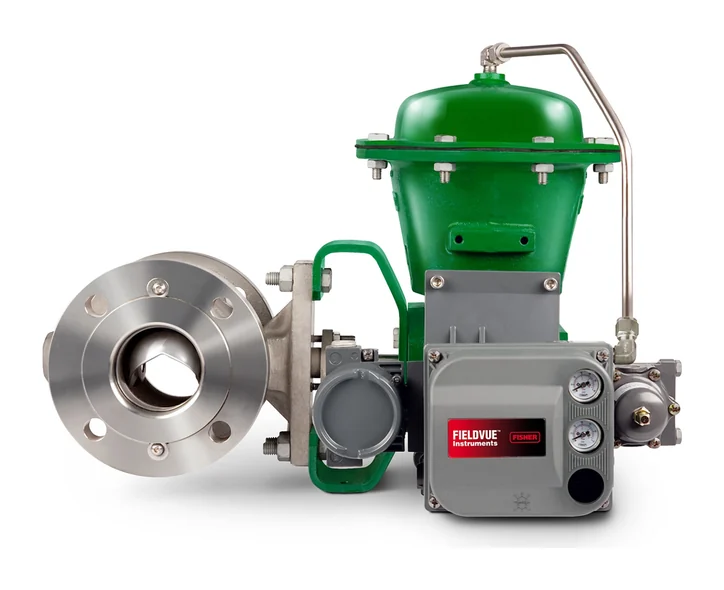
Fisher
2052
Compact rotary actuator for throttling or on/off service, even where space is limited.
View bulletin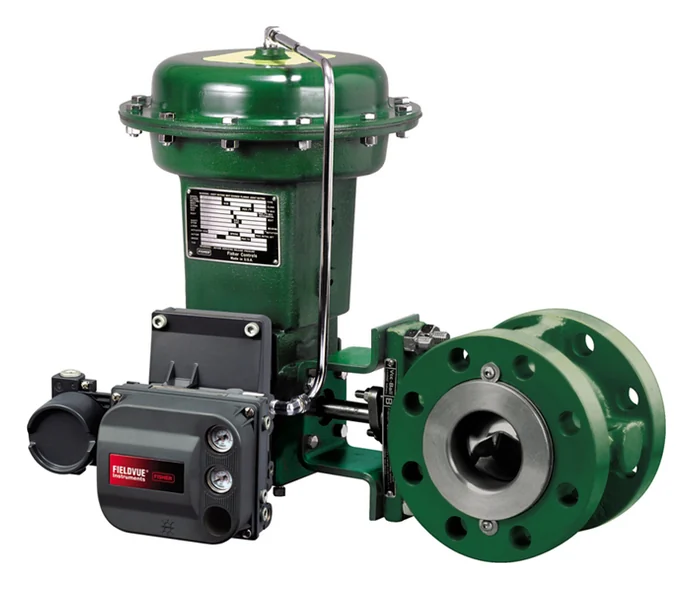
Fisher
1052
Spring-return diaphragm rotary actuator for splined-shaft valves; the manufacturer lists sizes 20 to 60 as obsolete.
View bulletin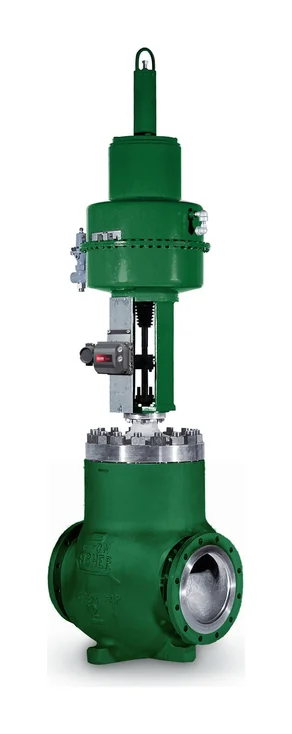
Fisher
3025
Long stroke, with small-to-medium thrust for sliding-stem valves.
View bulletin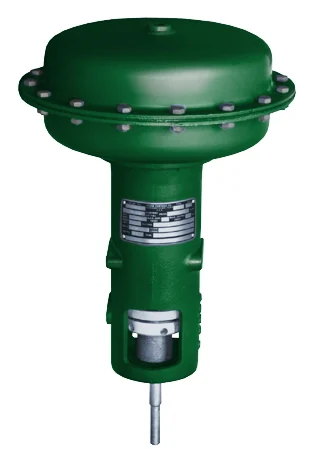
Fisher
656
Direct-acting, bracket-mounted, for butterfly valves, louvers and dampers.
View bulletinBrand reference models per the manufacturer’s catalog. ITS quotes new valves and genuine parts to order; it does not publish stock or prices.
How it works
In a direct-acting actuator such as the 657, air enters above the diaphragm and extends the stem; when the air is removed, the spring retracts it. In a reverse-acting actuator such as the 667, air enters below the diaphragm and retracts the stem, and it is the spring that extends it. Combined with the closing direction of the valve, the actuator action defines whether the assembly opens or closes on loss of air.
The spring is precompressed on the bench so that the actuator strokes within a defined pressure range: this is the bench set. On the 657 and 667, the molded diaphragm travels in a deep casing that minimizes area change throughout the travel, and the integral mounting pad with an internal air passage allows a FIELDVUE instrument to be installed without a bracket or external tubing.
Air extends the stem and the spring retracts it. With a push-down-to-close valve, the assembly opens on loss of air.
Air retracts the stem and the spring extends it. With the same valve, the assembly closes on loss of air.
A spring-return diaphragm drives a lever clamped to the shaft of segmented ball, butterfly and eccentric plug valves. The 2052 uses nested springs that require no bench set.
The 3025 covers long-stroke sliding-stem valves; the direct-acting 656 is bracket-mounted on butterfly valves, louvers and dampers.
Applications
ITS de Venezuela
We quote new actuators and genuine Fisher parts (diaphragms, springs, seals, stem connectors and repair kits), overhaul the actuator in our Puerto Ordaz workshop with bench set and stroke test, and calibrate it in the field together with its positioner or with a FIELDVUE instrument and ValveLink. Parts are managed through the Venezuela ↔ Orlando inventory. For a quotation, send the model and size from the nameplate, the serial number, the failure action, the supply pressure and the spring range.
Quote parts or repairRepair to the manufacturer’s specification, with bench tests and report.
Pressure, temperature, flow and volume, in the field and in the laboratory.
On-site support, shutdowns, commissioning and start-up.
Resources
The full category, the technical library and the manufacturer’s official documentation.
Category
Pneumatic, electric and hydraulic valve automation.
Technical library
Our own documents and official Fisher links for each family.
Manufacturer
Product pages, bulletins and manuals on emerson.com.
The action. In the direct-acting 657, air extends the stem and the spring retracts it; in the reverse-acting 667, the opposite happens. With a push-down-to-close valve, the 657 leaves the valve open on loss of air and the 667 leaves it closed. The choice follows the safe position the process requires.
It is the air pressure range over which the actuator strokes fully with no process load, set on the bench through spring precompression. It is adjusted so that, under process forces, the valve closes with the required seat load and strokes within the signal range. A wrong bench set causes seat leakage or incomplete travel.
Actuators
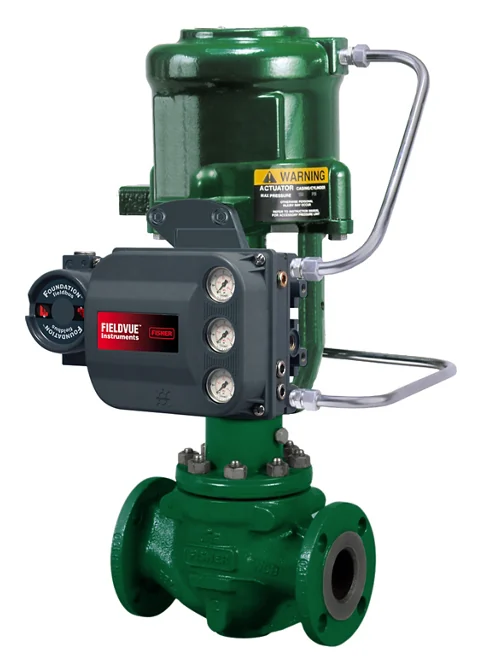
More thrust and stiffness than a diaphragm: air acts on a piston to move large valves or valves with high pressure drops.
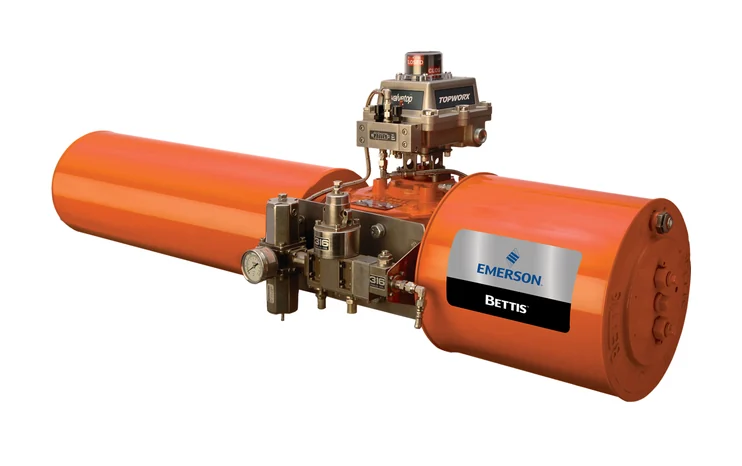
Quarter-turn with torque where the valve needs it: the yoke turns piston thrust into rotation for ball, butterfly and plug valves.
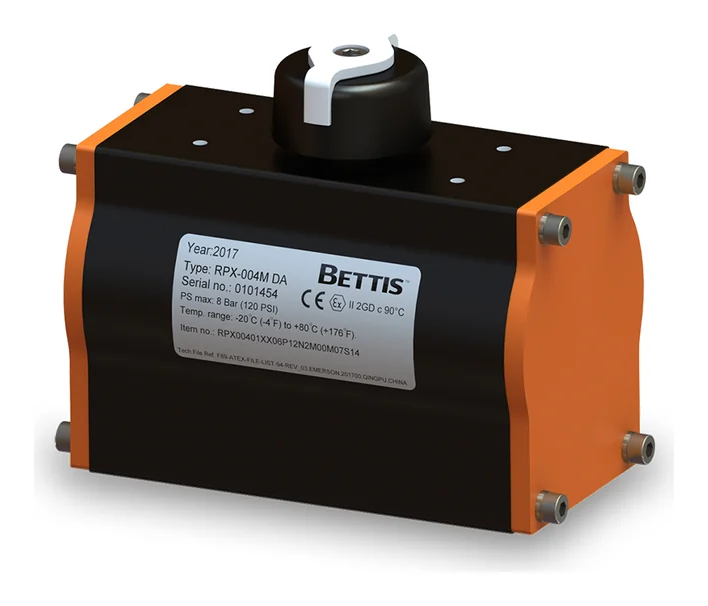
Compact and balanced: two piston racks turn a central pinion to automate ball, butterfly and plug valves.
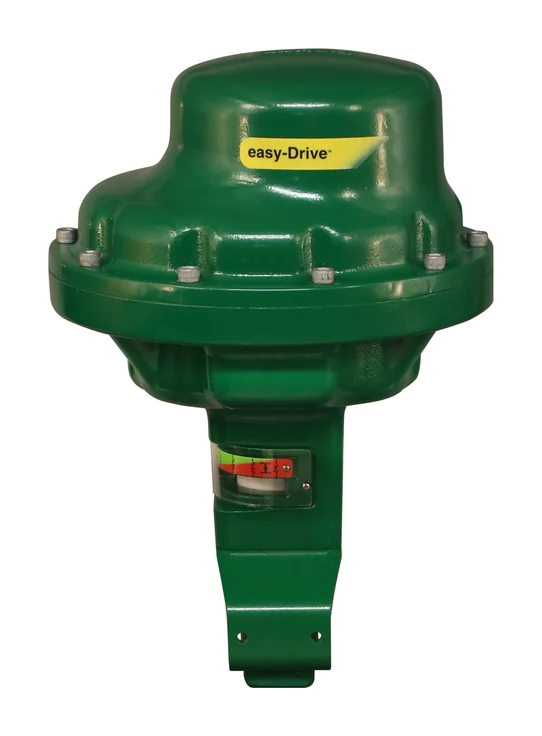
An electric motor instead of air: throttling or on/off control where there is no instrument air, with no gas vented to the atmosphere.
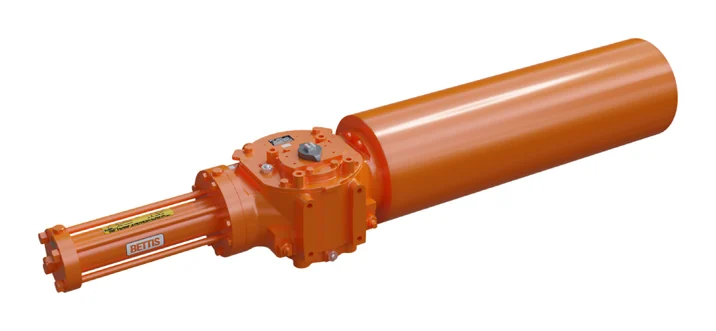
High torque and fast response for large, high-pressure and emergency shutdown valves.
Send the model, the part number or the process data. We reply with availability, lead time and delivery terms.