
Fisher
FB
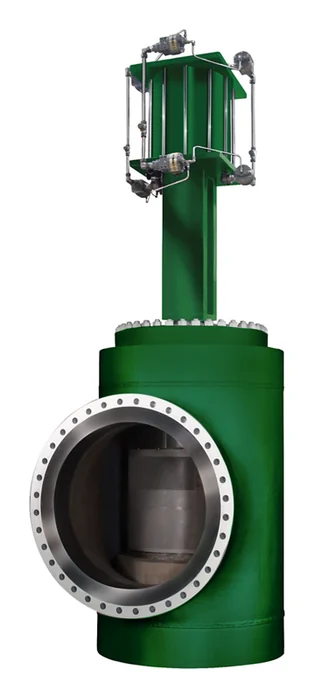
Fisher FB angle valves
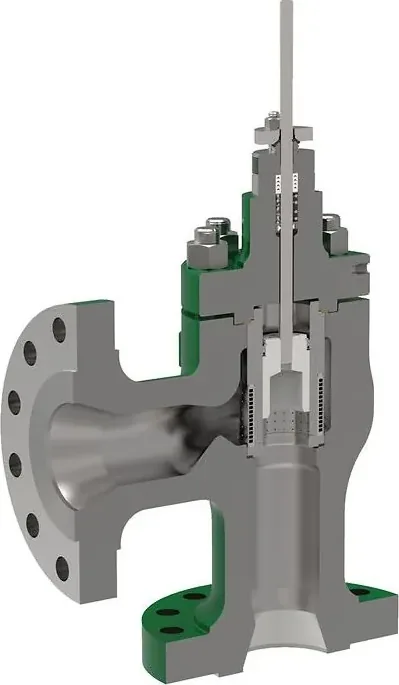
High-pressure angle body for erosive and flashing service.
View bulletin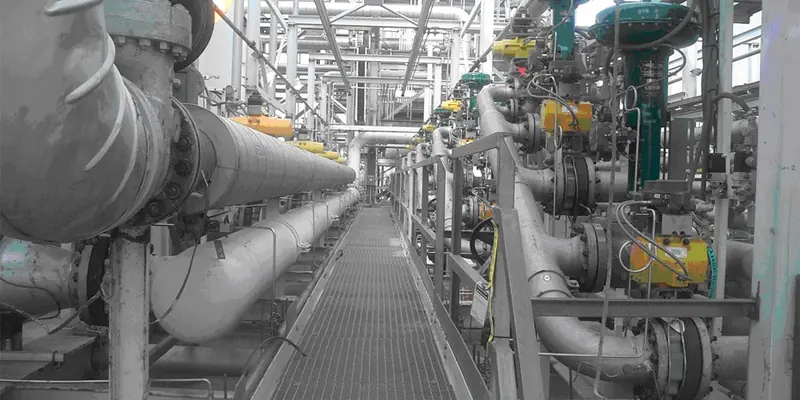
Final control · Control valves
Perpendicular inlet and outlet: the geometry that protects the trim in erosive and flashing service and saves space in tight piping.
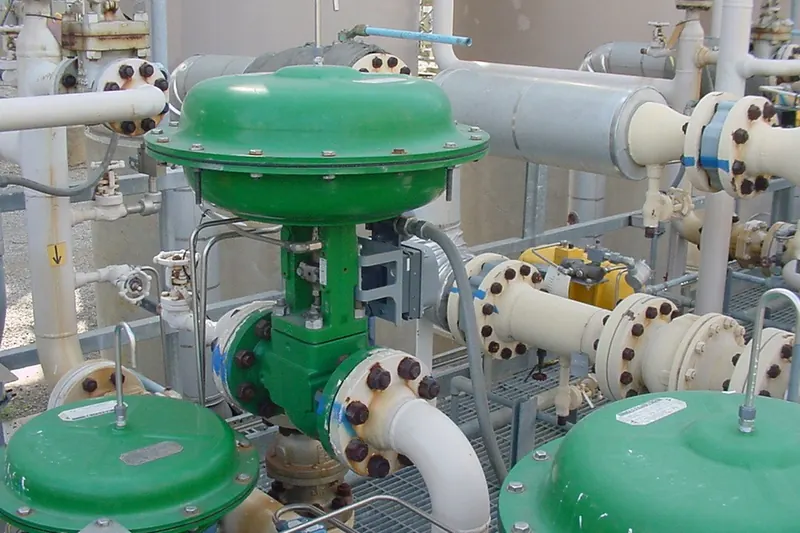
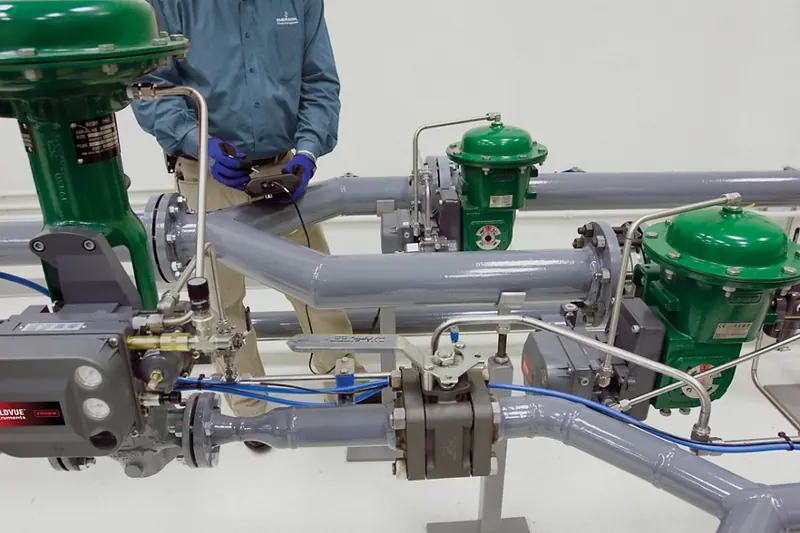
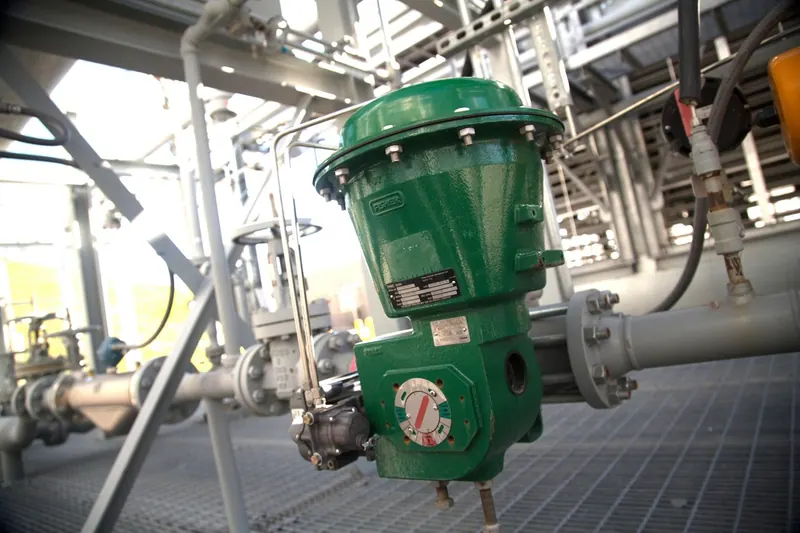
An angle valve is a sliding-stem control valve with perpendicular inlet and outlet ports: in effect, a globe valve built into an elbow, which changes the direction of the line while it controls the flow.
In tight piping it saves space and installation time, and its single clean change of direction makes it the traditional answer for erosive and flashing service, especially with an expanded outlet. It shares the trim flexibility of the globe valve.
Models
Manufacturer reference models for this type. Tell us the exact model or attach the nameplate: scope and availability are confirmed with each quotation.
Fisher
FB
High-pressure angle body for erosive and flashing service.
View bulletin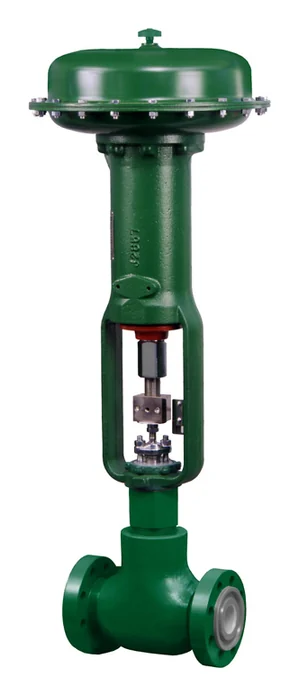
Fisher
D / DA
High-pressure globe (D) and angle (DA) for field production.
View bulletinBrand reference models per the manufacturer’s catalog. ITS quotes new valves and genuine parts to order; it does not publish stock or prices.
How it works
Most angle bodies use the same constructions as globe valves: single-seated post-guided trim for stringent shutoff, or cage-guided trim, balanced or unbalanced, that retains the seat, guides the plug and sets the characteristic. The 90° body simply routes the flow through the seat and out the perpendicular port.
For erosive and flashing duties the key features sit downstream of the throttle: expanded outlets and outlet liners drop the velocity and keep the high-energy stream off critical surfaces, while hardened trim materials resist the wear that remains.
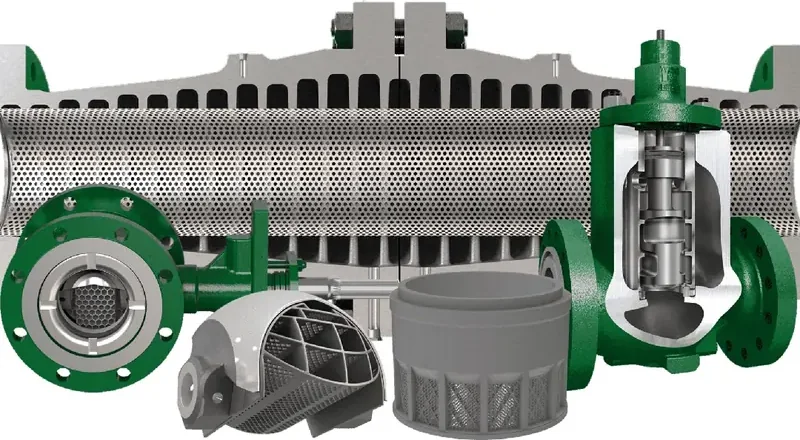
The cage retains the seat, guides the plug and sets the characteristic; balanced trim cancels most of the force and allows smaller actuators.
Single-seated trim with metal-to-metal or soft seating for stringent shutoff, common in smaller sizes.
Expanded outlet connections, restricted trim and liners that reduce erosion, flashing and cavitation damage by slowing the stream.
Self-draining angle bodies with threaded bonnets for oil and gas production, in high pressure classes.
Applications
ITS de Venezuela
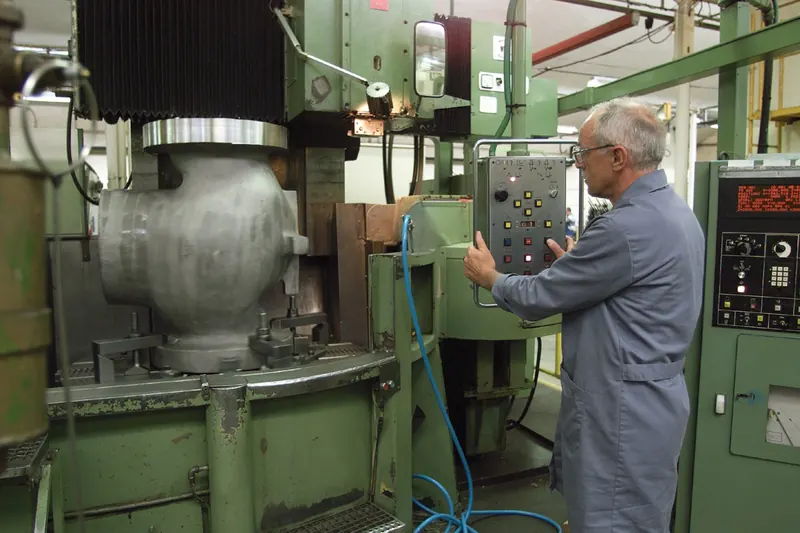
We quote new angle valves and genuine parts (trim, cages, seats, outlet liners, bonnets and packing), assess trim condition in erosive service and repair in the shop. To select, we need the fluid, the pressures and whether there is flashing or solids.
Quote parts or repairRepair to the manufacturer’s specification, with bench tests and report.
Engineering assessment of plug, seat and cage before rebuilding.
Resources
The sizing guide, the technical library and the manufacturer’s official documentation.
Guide
Service data, Cv, choked flow, characteristic and the mistakes that cost capacity and control.
Technical library
Our own documents and official Fisher links for each family.
Service
Shop in Puerto Ordaz and field service to bring the valve back to specification.
Manufacturer
Product pages, bulletins and the Control Valve Handbook on emerson.com.
When the service is erosive, flashing or two-phase, when the piping already turns 90° at that point, or when an expanded outlet is needed to slow the fluid downstream. For a straight run with a clean fluid, the globe valve is simpler.
It is the partial vaporization of a liquid when the downstream pressure stays below its vapor pressure. The high-velocity two-phase jet erodes the outlet and the piping. An angle body with expanded outlet and hardened materials is the usual answer.
Type
Send the model, the part number or the process data. We reply with availability, lead time and delivery terms.